

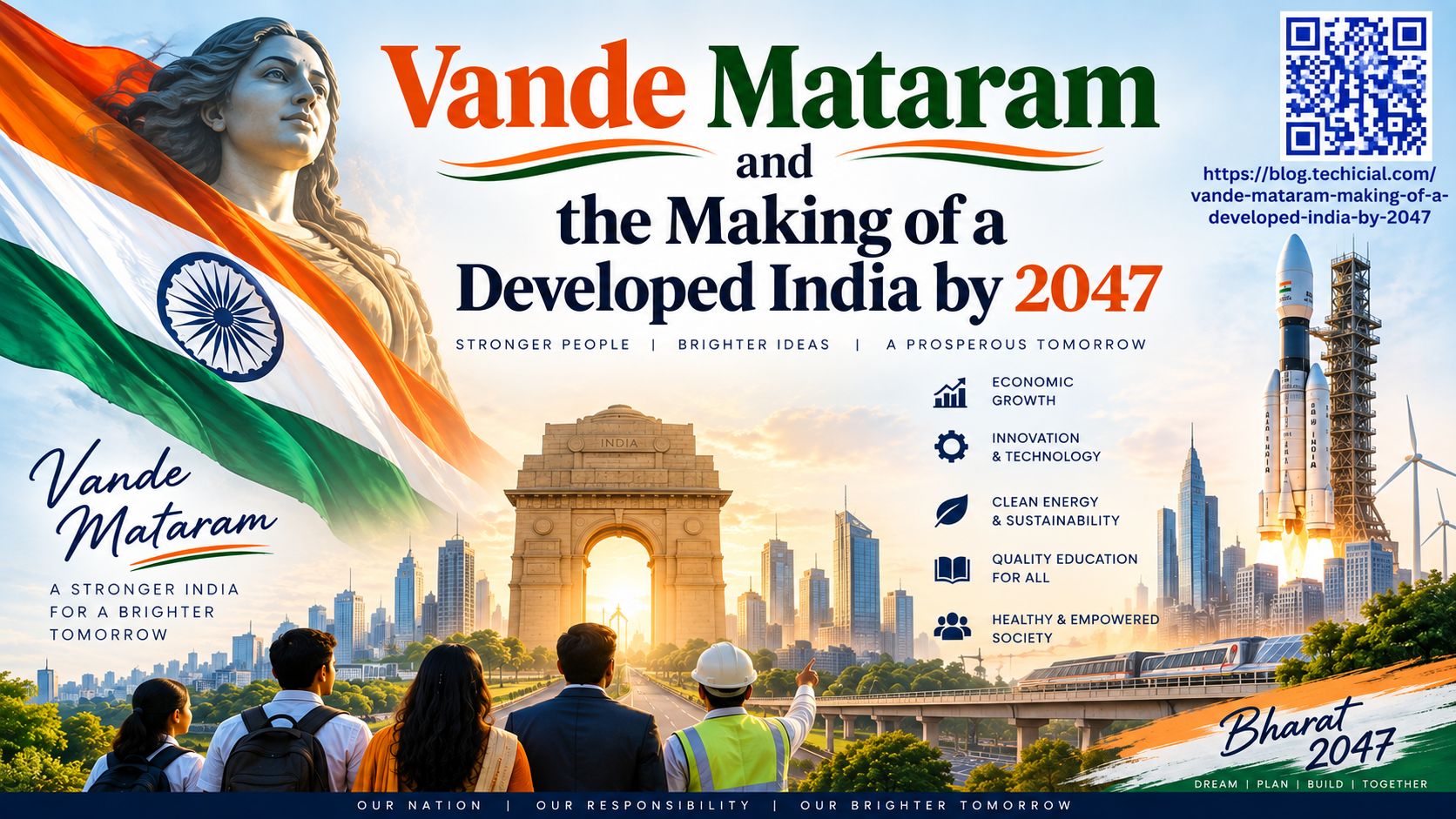
Vande Mataram and the Making of a Developed India by 2047
Short Summary
As India looks toward 2047, the national song "Vande Mataram" continues to shape values, unity, and purpose. This story explores how cultural memory fuels national development.
When a Song Becomes a Compass
There are moments in life when a song does more than fill silence. It straightens your back. It sharpens your sense of belonging. It reminds you that you are part of something older, larger, and deeply alive. For millions of Indians, "Vande Mataram" is that song. It does not shout. It does not command. It quietly stirs something internal, something ancestral. Sung in classrooms, echoed at public gatherings, whispered in moments of national pride, it has traveled with India from chains to choices, from struggle to self-definition.
As the nation approaches the year 2047, marking 100 years of independence, the conversation around a Developed India often focuses on infrastructure, economy, and technology. These matter, of course. But beneath concrete and code lies a softer foundation: shared values, emotional unity, and cultural memory. This is where "Vande Mataram" enters the story, not as nostalgia, but as a living force shaping India's future 🌍
The Birth of a Song That Refused to Stay Silent
"Vande Mataram" was born during a time when India was searching for its voice. Written by Bankim Chandra Chattopadhyay in the late 19th century, the song did not arrive as a polite poem. It arrived as a pulse. At a time when the idea of India itself was fragmented by colonial rule, languages, and regions, the song offered a unifying image: the motherland as sacred, nurturing, and worthy of devotion.
This metaphor changed everything. It transformed geography into emotion and resistance into reverence. Unlike slogans that fade with time, "Vande Mataram" embedded itself into the collective psyche. It was sung by freedom fighters knowing they might not see independence. That sacrifice gave the song moral weight that no era can erase. By understanding this origin, students today inherit not just lyrics, but a responsibility.
Why National Songs Shape Nations
A nation is not held together by borders alone. It is held together by shared feelings. National songs work at this invisible level. "Vande Mataram" does not describe policy or power. It describes belonging. When sung, it momentarily dissolves differences of class, language, and ideology. In that brief moment, everyone stands under the same emotional sky. This emotional synchronization is not symbolic.
It has real consequences. Countries that sustain strong cultural anchors often display higher civic responsibility, social trust, and long-term vision. Cultural nationalism, when inclusive and ethical, becomes a stabilizing force. "Vande Mataram" has played this role in India by reminding citizens that development is not just about personal success, but collective upliftment. As India moves toward 2047, this emotional glue becomes even more critical.
A Cultural Bridge Across Languages and Regions
India is famously diverse, sometimes beautifully so, sometimes chaotically so. One of the quiet miracles of "Vande Mataram" is its ability to cross linguistic borders without resistance. Though composed in Sanskritized Bengali, its essence is universally understood. Tamil Nadu, Punjab, Assam, Kerala, and beyond have all embraced the song in their own ways.
This acceptance reflects a deeper truth: unity does not require uniformity. In a developed India, cultural confidence will matter as much as economic strength. The song teaches that embracing national identity does not erase regional pride. Instead, it offers a larger home where all identities can breathe. For college students navigating globalized identities, this lesson is priceless.
Youth as the Living Verse of Vande Mataram
Every generation rewrites the meaning of national symbols. For today's youth, "Vande Mataram" cannot remain confined to ceremonial moments. It must translate into action. A developed India by 2047 will be built largely by students currently sitting in lecture halls, libraries, and hostels. Their interpretation of patriotism will determine the nation's direction.
Patriotism today is not limited to protests or slogans. It shows up in ethical innovation, responsible leadership, scientific integrity, and social empathy. When a young entrepreneur chooses sustainability over shortcuts, that is "Vande Mataram" in practice. When a student questions injustice respectfully but firmly, that too is devotion to the motherland. The song becomes meaningful when it shapes behavior, not just emotion.
Education as a National Act
Education is often treated as a personal ladder to success. But through the lens of "Vande Mataram," education becomes a national responsibility.
The freedom fighters who sang this song dreamed of an India where knowledge served society, not just individuals. A developed India in 2047 will need thinkers who balance ambition with accountability.
Universities play a crucial role here. They are not factories for degrees. They are laboratories for citizenship. By embedding cultural awareness alongside technical excellence, education can produce graduates who innovate without losing empathy.
"Vande Mataram" reminds students that learning is a form of service.
From Colonial Resistance to Developmental Resolve
During the freedom struggle, the song unified Indians against an external oppressor. In modern India, the challenge is internal.
Poverty, inequality, environmental degradation, and ethical erosion cannot be blamed on colonial rulers anymore. These are tests of national maturity. The role of "Vande Mataram" has evolved accordingly.
Today, it asks a harder question: What are you doing with the freedom earned by sacrifice?
A developed India by 2047 will not emerge by accident. It will require discipline, honesty, and long-term thinking. The song's quiet dignity serves as a moral compass, urging citizens to rise above short-term gains.
Technology Needs a Soul Too
India's future is undeniably technological. Artificial intelligence, biotechnology, renewable energy, and space exploration are already reshaping the nation's global image 🚀
Yet technology without ethics can hollow out societies.
"Vande Mataram" offers a cultural counterbalance. It anchors progress in values. It reminds innovators that their work impacts lives, ecosystems, and future generations. When technology serves humanity instead of ego, development becomes sustainable.
In this sense, the song acts as a moral algorithm, guiding choices that spreadsheets cannot measure.
India 2047: Development Rooted in Identity
The vision of a Developed India 2047 often features smart cities, economic strength, and global influence. These are important. But true development also includes social harmony, cultural confidence, and emotional resilience.
Nations that forget their cultural roots often struggle with identity crises. India's advantage lies in remembering while moving forward. "Vande Mataram" encapsulates this balance beautifully.
It does not reject modernity. It humanizes it.
For students, this means embracing global knowledge while staying grounded in national values. It means seeing success not just as personal achievement, but as national contribution.
What Students Can Do Today
The journey to 2047 is already underway. Waiting is not an option.
Students can live the spirit of "Vande Mataram" by choosing integrity in academics, empathy in leadership, and responsibility in digital spaces. Volunteering, ethical entrepreneurship, informed voting, and lifelong learning all contribute to national development.
Small actions compound. A developed India will be built less by grand speeches and more by consistent, ethical effort.
Frequently Asked Questions
How does Vande Mataram contribute to nation building today?
It strengthens emotional unity, ethical awareness, and cultural identity, which are essential for sustainable development.
Why is Vande Mataram relevant for youth in 2047?
Because the youth will lead India's institutions, and cultural grounding helps guide responsible leadership.
Can cultural symbols really influence economic development?
Yes. Shared values improve social trust, cooperation, and long-term thinking, all vital for economic growth.
Is patriotism compatible with global citizenship?
Absolutely. Strong national identity often enhances confident global engagement rather than limiting it.
How can colleges promote the values of Vande Mataram?
By integrating cultural education, civic responsibility, and ethical leadership into academic life.
A Song Still Walking With Us
"Vande Mataram" has never been a relic. It walks beside India, adapting quietly, patiently.
As 2047 approaches, the song does not demand applause. It asks for sincerity. It asks whether development will be shallow or meaningful, fast or thoughtful, selfish or shared.
A developed India will not just be measured in GDP or rankings. It will be recognized in how its people treat each other, protect their land, and carry their history forward.
In that future, if the spirit of "Vande Mataram" still lives in everyday choices, India will not just be developed. It will be whole 🌱


